It’s rare that a well-designed bathroom is the center of attention for a park or sports complex. However, it can affect how people feel about the location. It’s a great experience for those visiting to locate a restroom that is clean safe and easily accessible and also easy to use. If the restroom is old-fashioned, unattractive, hard to maintain or badly designed, it may leave an unwelcome impression and be one of the biggest complaints a park department is able to hear.
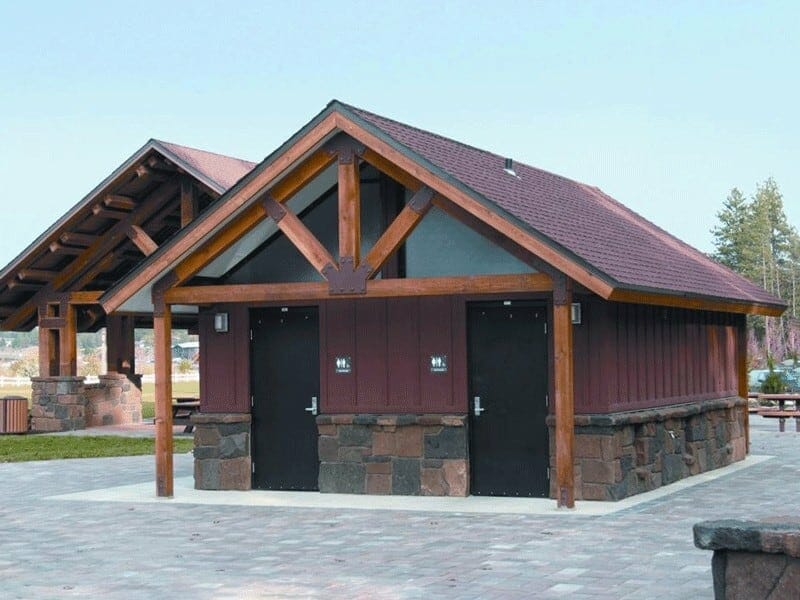
In recent years the communities are beginning to pay attention to the construction of restrooms. Owners are beginning to understand that restroom buildings are more than just a simple utility structure. The purpose of the building should be to provide services to its users as well as the maintenance crew responsible for it, and blend into the environment.
Each project may not require the same type of restroom solution
One of the biggest blunders when it comes to planning public facilities is to assume that one restroom design will work for all locations. A small park within the neighborhood will have different requirements in comparison to a sports complex on a regional scale. A trailhead which is away from the water and doesn’t have access to it requires an alternative to an urban area with durable facilities. All campgrounds, pools, public gathering spaces and other venues are governed by their own traffic patterns and maintenance needs.
Designing with care makes an impact. Romtec collaborates with municipalities and park departments engineers, architects, and contractors to build restrooms which are designed to meet the actual use of the site. It could be an individual-use structure to provide a peaceful, natural area, a large multi-user structure in a sports park or municipal pool, or a building with showers to be used for a campsite or municipal pool or even steel sidewalk toilets designed to accommodate the needs of urban dwellers. The idea isn’t simply to build a structure on the spot and then to construct something that is practical for the people who will be using it daily.
All prefabricated park restrooms are not the same
Many buyers begin their search by looking at prefabricated park restroom buildings because they want speed, simplicity, and predictable construction costs. This makes sense. But there’s a big difference between a generic prefabricated structure and a custom-designed building solution which still offers the advantages of a simple and streamlined process.
Romtec’s approach to restroom project is much more flexible than the traditional prefabrication process. Instead of requiring a city or park to conform to rigid restrictions in design, the company offers plans, specifications and even materials that can be designed to suit the particular project and location. This means that the restrooms are designed in accordance to the architectural style, ADA guidelines, sustainability goals in addition to climate, traffic, and maintenance requirements. The building will feel like it belongs in the park or public space.
A clean restroom encourages use by the public.
People often talk about restroom facilities solely in terms the size, plumbing, or maintenance costs, but the user experience is also important. Clean, beautiful buildings that have durable materials and good visibility are a sign of care. It can also affect the way people view the space.
Romtec’s design philosophy rests on both functionality and appearance. They should look inviting and complement the surrounding environment. Design details in public spaces could reduce abuse, discourage theft, and encourage people to have a pleasant experience. Bathrooms that are bright and visible, as well as designed with purpose will feel very different than one that’s hidden and unappreciated or just functional.
Sidewalk restrooms are the answer to another public requirement
Urban environments present a unique challenge. Clean restrooms affect sanitation, the comfort of the public, and usability of the streetscapes in downtown districts, transit corridors and tourist zones. Sidewalk restrooms have been specifically designed for this purpose.
In contrast to larger restrooms in parks they are built to have a smaller footprint and must withstand frequent usage as well as the demands of maintaining city facilities. Romtec’s restrooms for sidewalks are constructed to last, be easy to clean, and prevent misuse. Stainless steel fixtures, sleek layouts, as well as robust materials make it possible to create facilities that work in busy urban environments while also being practical for maintenance teams and accessible to the general public.
Bathroom facilities are a an element of a larger visitor infrastructure plan
Many communities do not view restrooms as a standalone project. They form part of a larger effort to improve public spaces through enhanced visitor amenities. It might be necessary to have a toilet and concessions in a sports park. The campground might require showers, changing areas, or alternatively, waterless facilities for remote sections of the property. The smaller structures are often needed to accommodate a trail system in a natural environment without the need for utilities.
Romtec is dedicated to this wide-ranging view and develops more than conventional bathrooms. Owners can create restroom buildings, shower structures, concession spaces and specialty structures that are designed to accommodate the actual usage of the space. The bigger picture is essential because restrooms should not be thought of as a separate entity. It must be designed to accommodate the flow of the room, the ease of use and long-term viability.
Better public spaces are created by better facilities
Restrooms are among those public investments people typically only notice when they’re done badly. When they’re done right they can quietly enhance the experience of parks, campgrounds, recreation facilities and city streets for decades. They promote cleanliness, comfort and accessibility as well as the overall perception.
Romtec’s work shows that restrooms don’t need to be boring, generic or limited by prefabricated rules. The design process can be tailored to customise prefabricated restrooms to fit a particular site that reflects the personality of the community, and better serve visitors. An improved design process will produce better results whether it’s restrooms in parks or public restrooms in busy areas, or sturdy sidewalk toilets that are suitable for urban environments.