It’s not until later that the performance of a lift-station is determined. Flow calculations, site elevations as well as system pressure as well as wastewater properties, peak conditions maintenance access, controls, and capacity in the future all impact the type of structure that will eventually be built.
The primary question important for the project’s owners to ask when comparing the best lift station designs isn’t who can design the pumps. The main issue isn’t who can design pumps however, but who is able to translate the site conditions and operational requirements into a system that’s feasible to construct, operate and maintain.
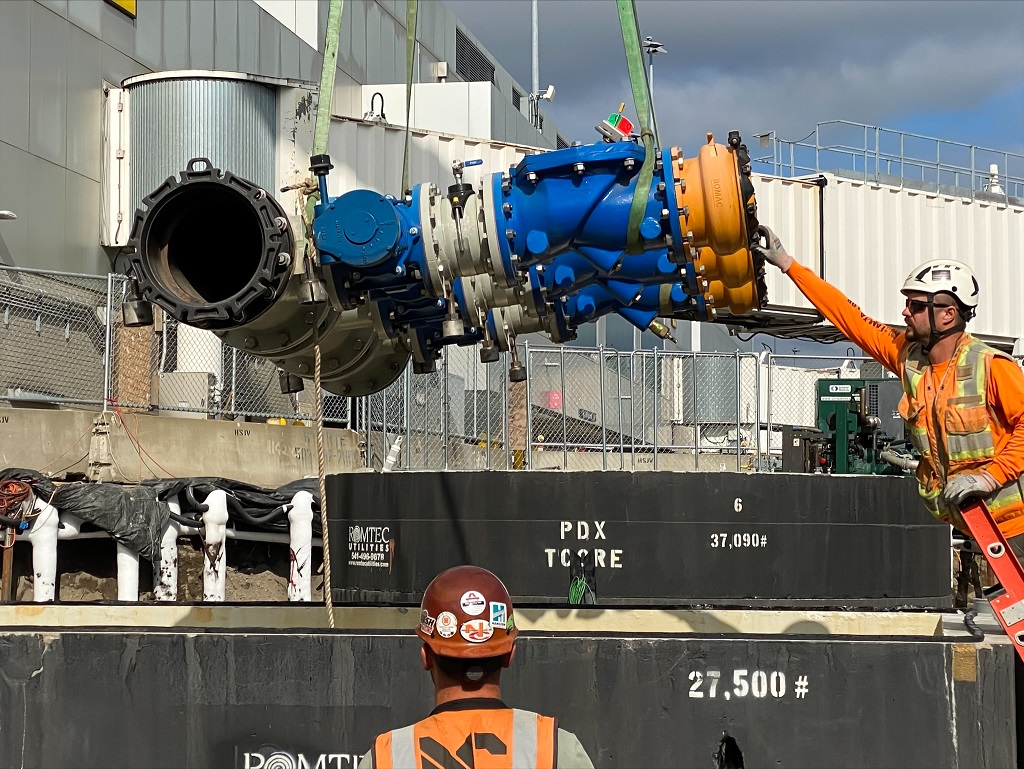
Image credit: romtecutilities.com
Gravity is not without limits
Gravity is often the most effective way to convey wastewater, however, the terrain and patterns of development do not always work together. It’s possible that new industrial, residential and commercial properties are too far, or too high. They could also be situated in areas where gravity sewer infrastructure extension is not possible.
Lift stations can supply the required force mechanically to move wastewater from one area of the system of collection to another. It is crucial to take into consideration the operating conditions that are normal and those that may be less suitable, such as high inflows, maintenance of the pump or equipment failure, or future demand increases.
Companies considered among the best wastewater designers should therefore evaluate the entire issue of conveyance rather than treating the station as a single piece of equipment.
The current infrastructure makes the puzzle harder
The construction of new buildings isn’t the sole problem. In order to maintain the necessary wastewater infrastructure, municipalities often need to upgrade or replace old stations.
Wet wells that are in use, force mains, electric services, controls, boundary lines for the site, as well as downstream infrastructure could limit the new design. Engineers must decide which elements can be reused and what needs to be replaced and how new components will integrate into the existing system.
Romtec Utilities works across municipal commercial, private, industrial, retrofit, and replacement projects, allowing pumping systems to be built around the specific needs of the owner and operation of every project.
Stormwater is subject to different rules
The best stromwater system designers using the supplied search terminology must solve a different hydraulic problem. Stormwater systems can experience dramatic fluctuations in volume due to the quantity of rainfall, drainage capacity and the discharge rate allowed.
A station serving a detention basin, for instance it may be required to keep runoff for a while and then pump it at a set rate. Engineers must take into consideration flow, head conditions, the requirements for environmental protection, flood-management goals as well as the features of the drainage system receiving it.
Prefabrication Can Move Work Away From the Jobsite
Field assembly is a complex process that can cause schedule conflicts, errors delays, and changes to orders. Romtec Utilities performs significant prefabrication of equipment before the project location.
By completing more assembly and quality control work in a controlled environment You can cut down on the amount of construction that is required on the ground. According to the project approach presented by Romtec Utilities, certain installations that could otherwise require weeks of work can be reduced to just a few days according to the circumstances of the project.
Our commitment to engineering success extends to commissioning
It’s not enough just to install all the components for a station to be regarded as a dependable one. Romtec Utilities offers installation advisors for assistance with construction that includes starting up controls, checks on control panels as well as pump operations, system testing and staff training. The documentation is also available for operators to help them understand how to maintain the system and consider future expansion.
For those looking for the most reputable lift station designers, this final step deserves consideration. The final product of quality engineering should go beyond an acceptable set of drawings. It should provide the owner with a functioning system and a skilled staff, as well as useful documentation, and equipment designed around the conditions the station will face during normal operation.